
Castor
Ricinus communis
Ricinus Communis (Castor) Seed Oil
One ingredient in every Hk's castor oil.

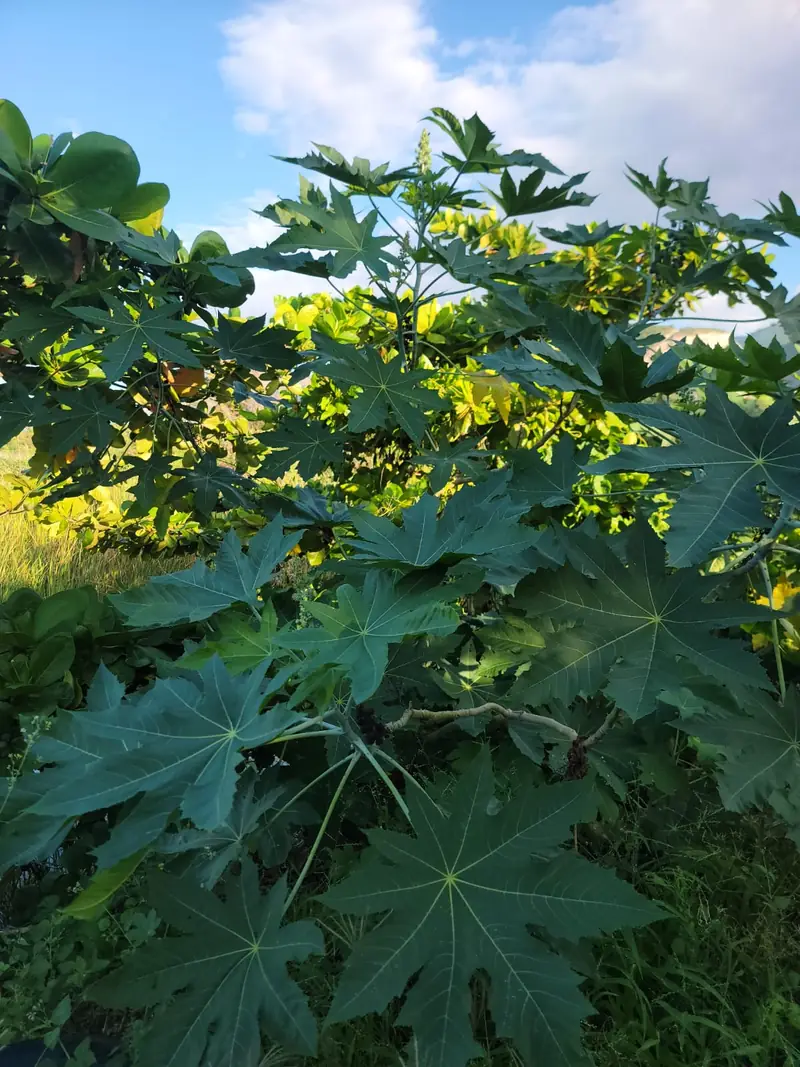
The plant
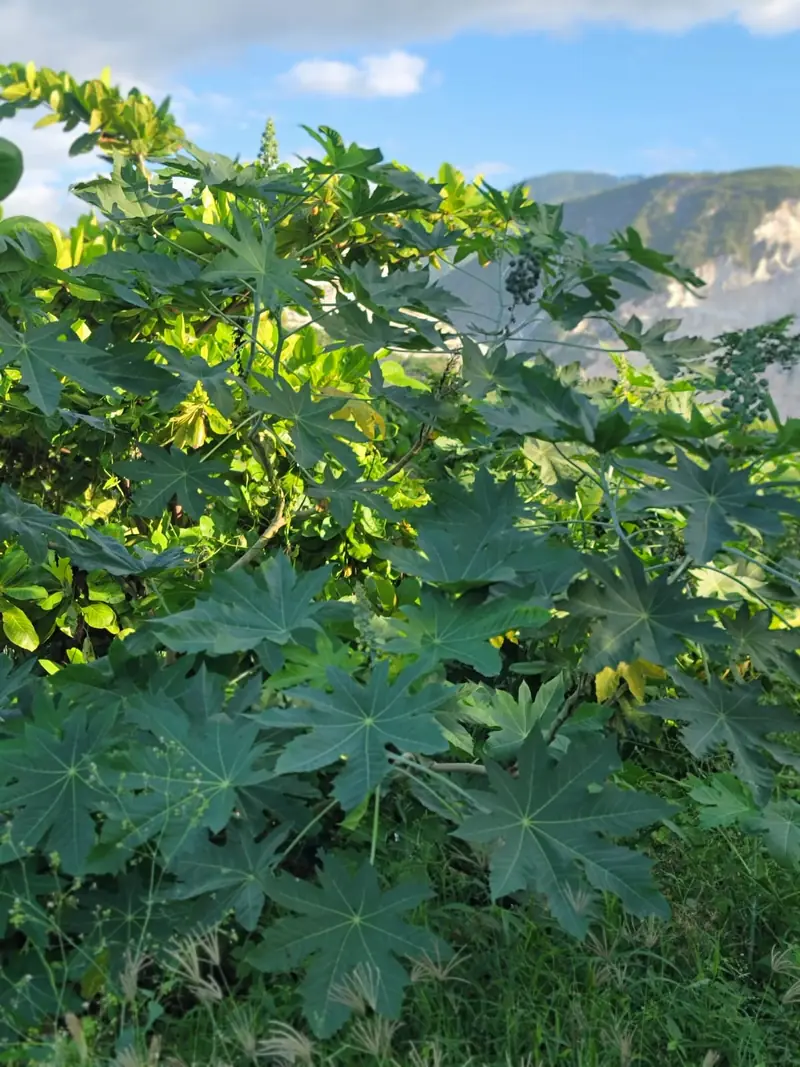
Castor plant 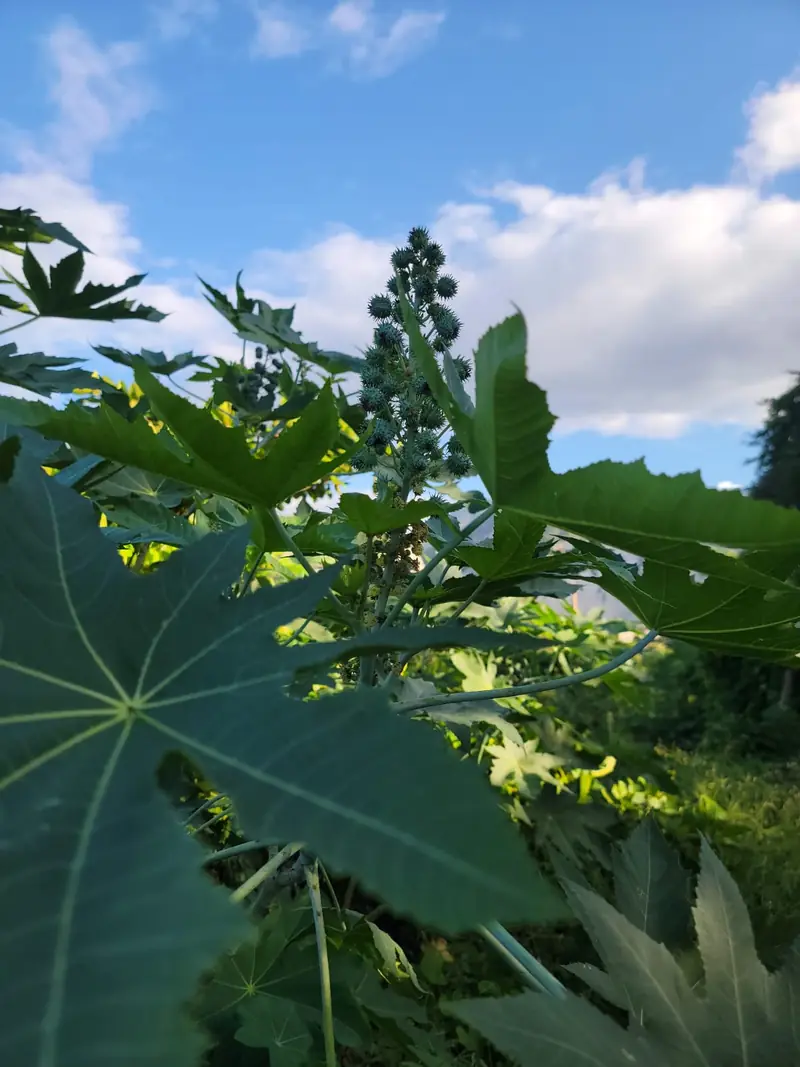
Castor seed spikes 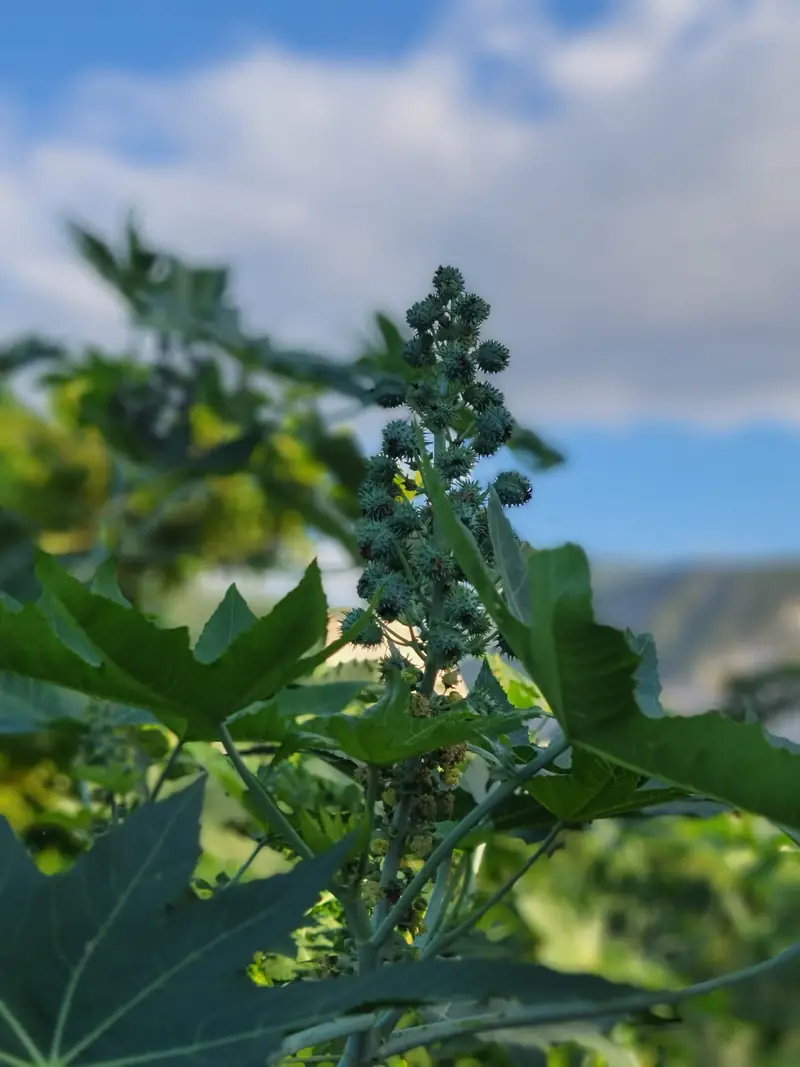
A castor seed spike 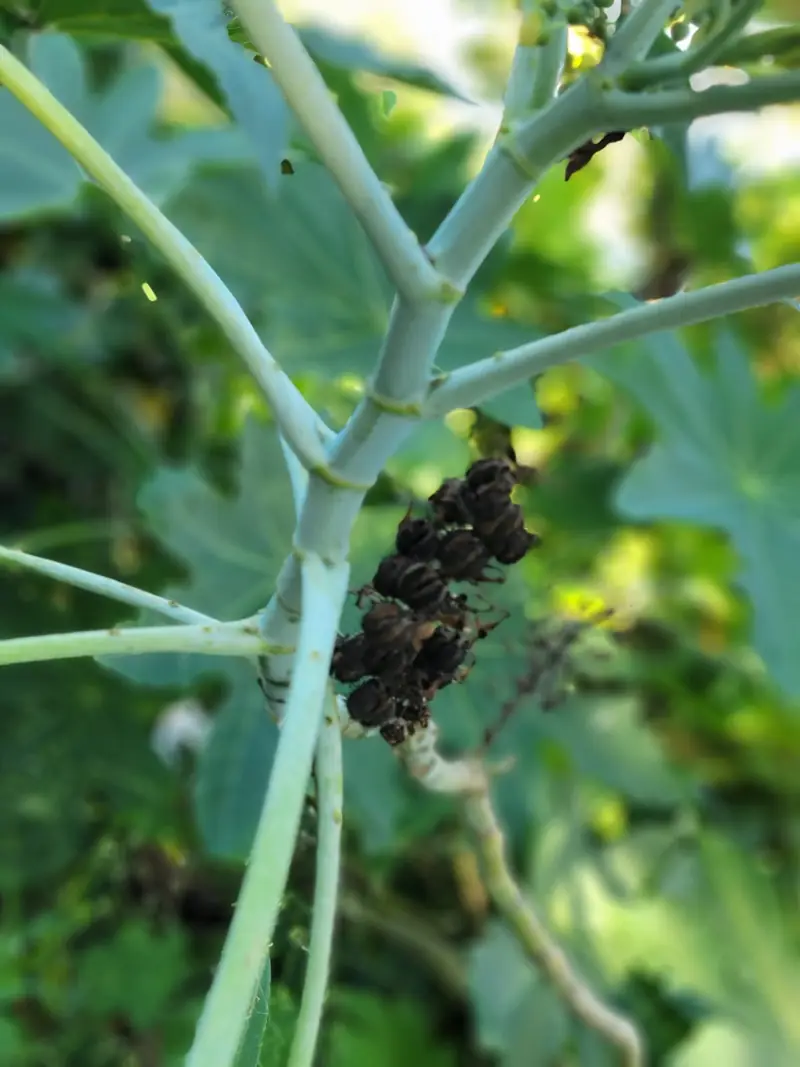
Seed pods drying on the plant 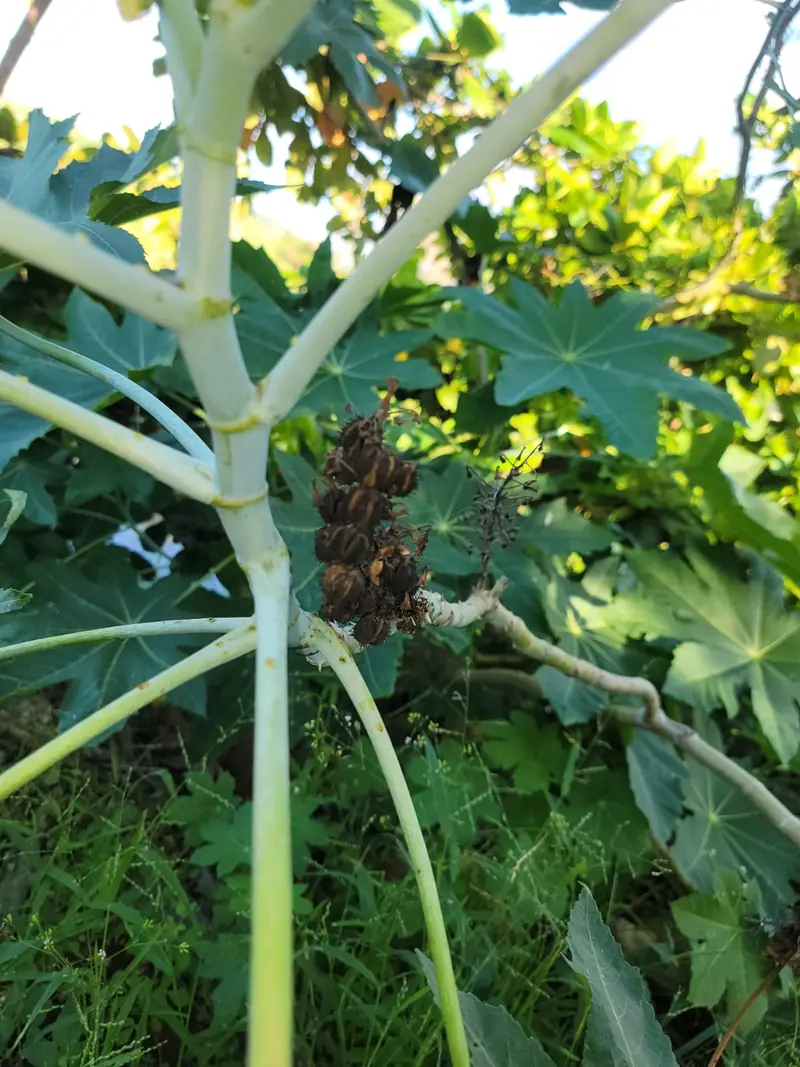
Seed pods drying on the plant
The beans
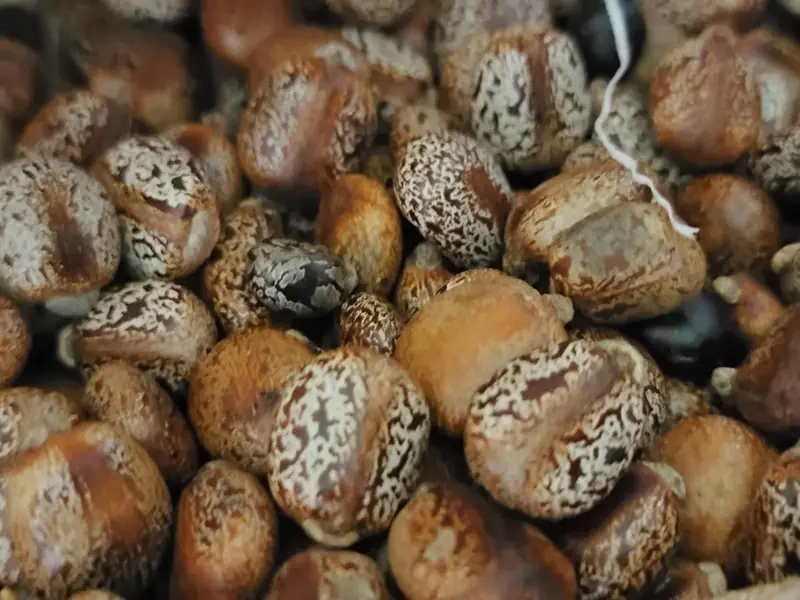
Castor beans 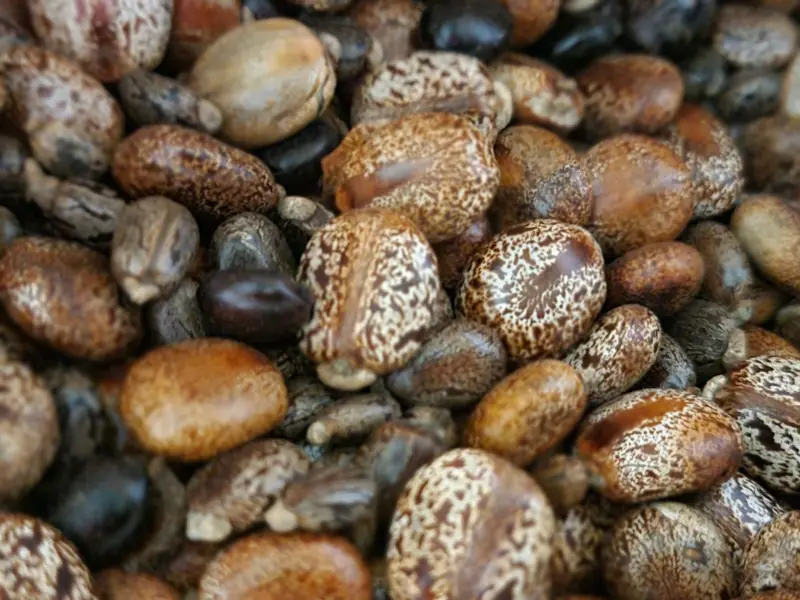
Castor beans 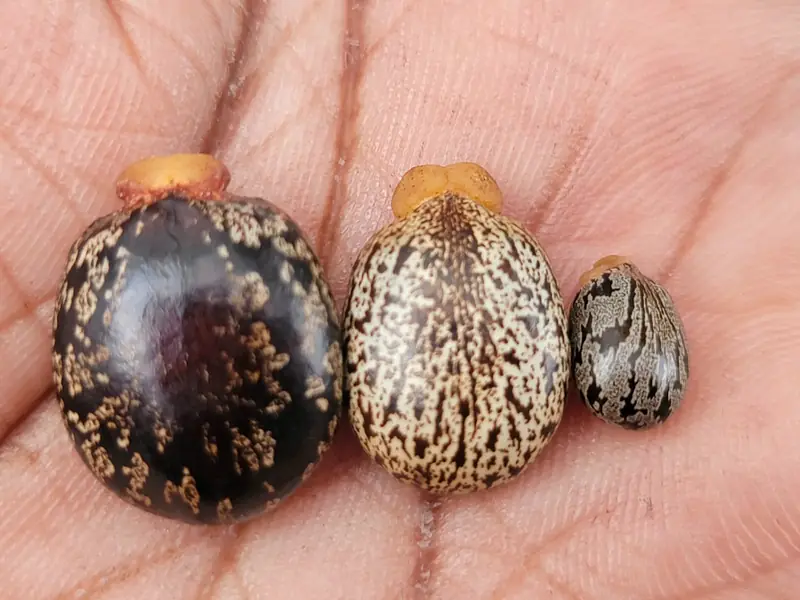
Castor beans come in different sizes


What's in the oil
Castor oil is about 85 to 90% ricinoleic acid, an unusually thick fatty acid. That is why the oil is thick.
85–90%
Three ways to make it
The same seed, three methods. The method sets the colour, the scent and the feel.
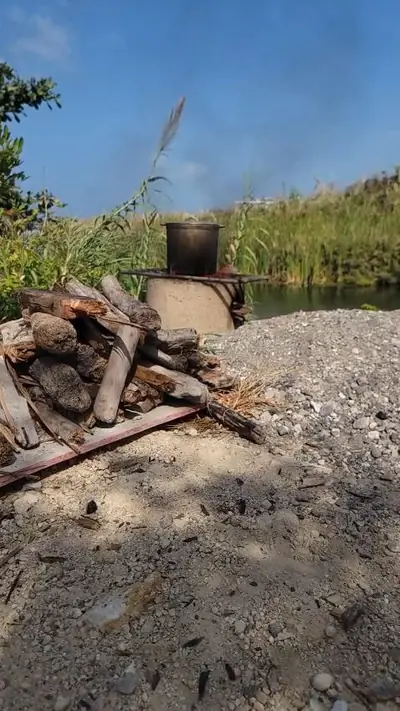
Cold pressed
- Unroasted beans
- Pressed, without heat
Pale · Mild
Cold Pressed Castor OilRoasted, pressed
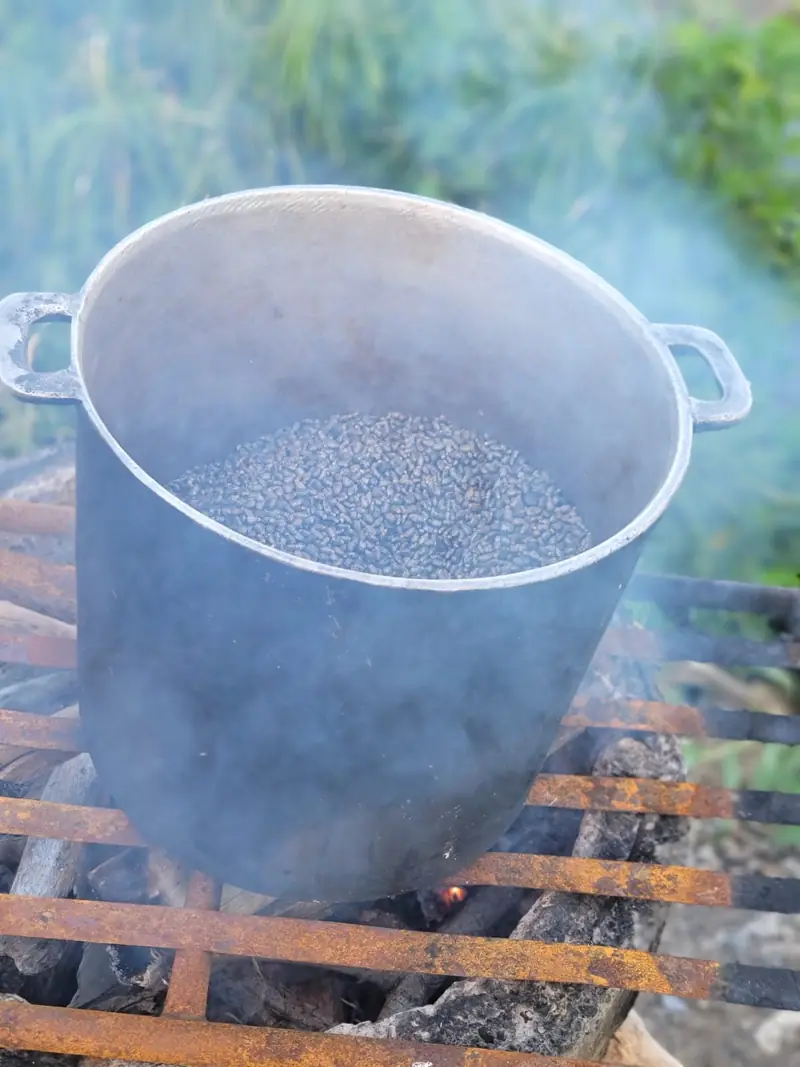
Roasting castor beans over an open fire - Beans roasted
- Then pressed
Dark · Smoky
Jamaican Black Castor OilRoasted, pounded and boiled
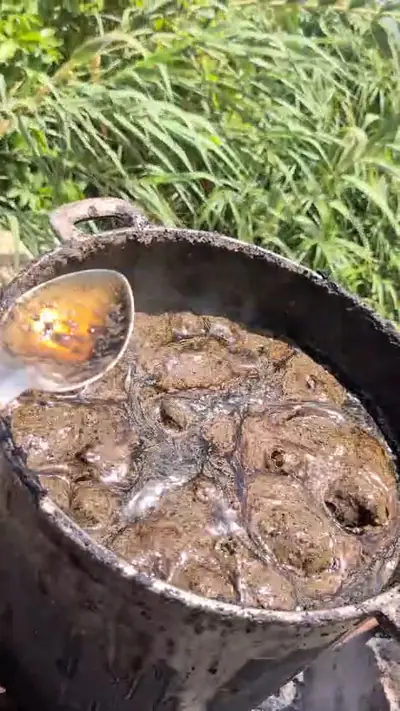
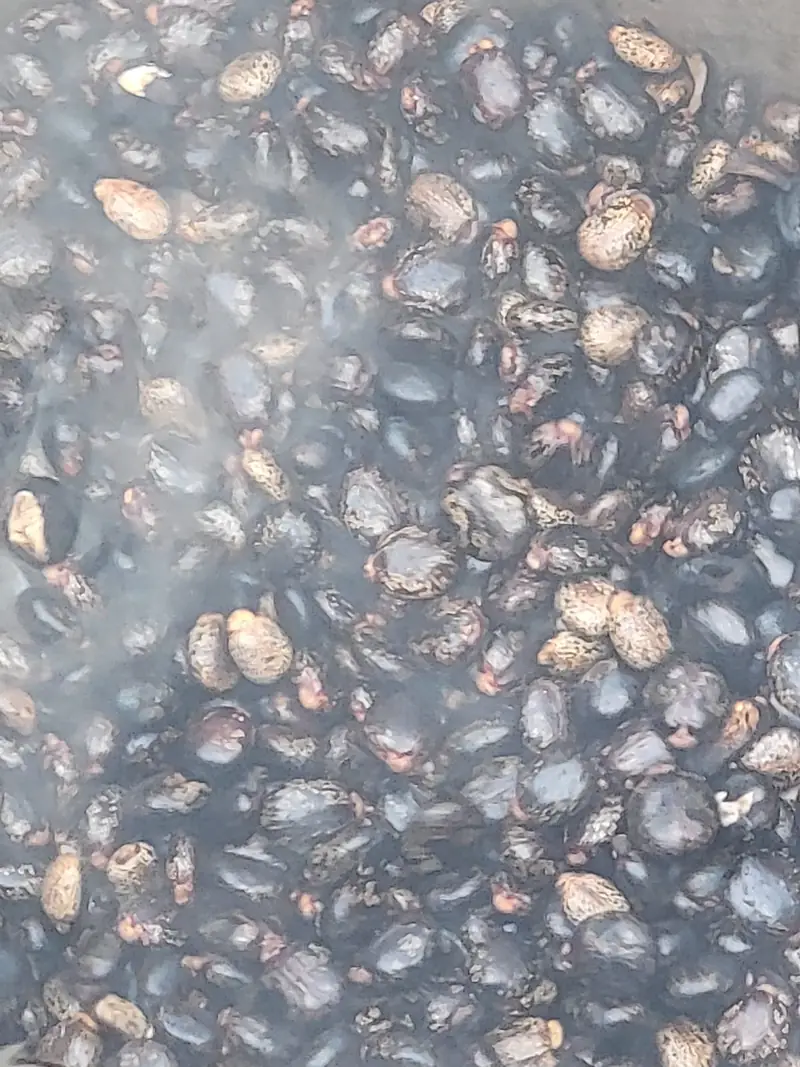
Roasting castor beans over an open fire Boiling the beans; the oil rises to the top - Beans roasted
- Pounded
- Boiled in water
- Oil skimmed off the top
- Made by hand
Dark · Smoky
Traditional Jamaican Black Castor Oil
Why it's dark
Jamaican black castor oil is dark because the beans are roasted first. The ash from roasting is part of what makes the oil dark.
You may see a pH quoted for black castor oil. Sources disagree, so we don't state one.
The oil
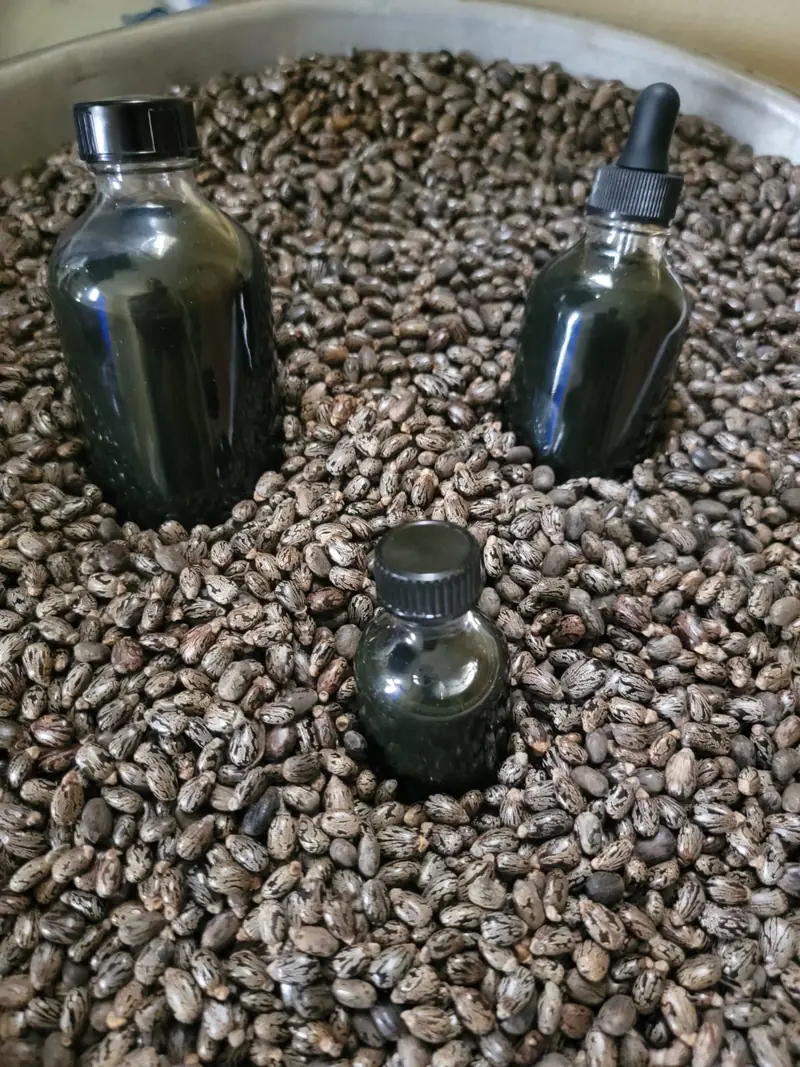
Black castor oil in 2, 4 and 8 oz bottles 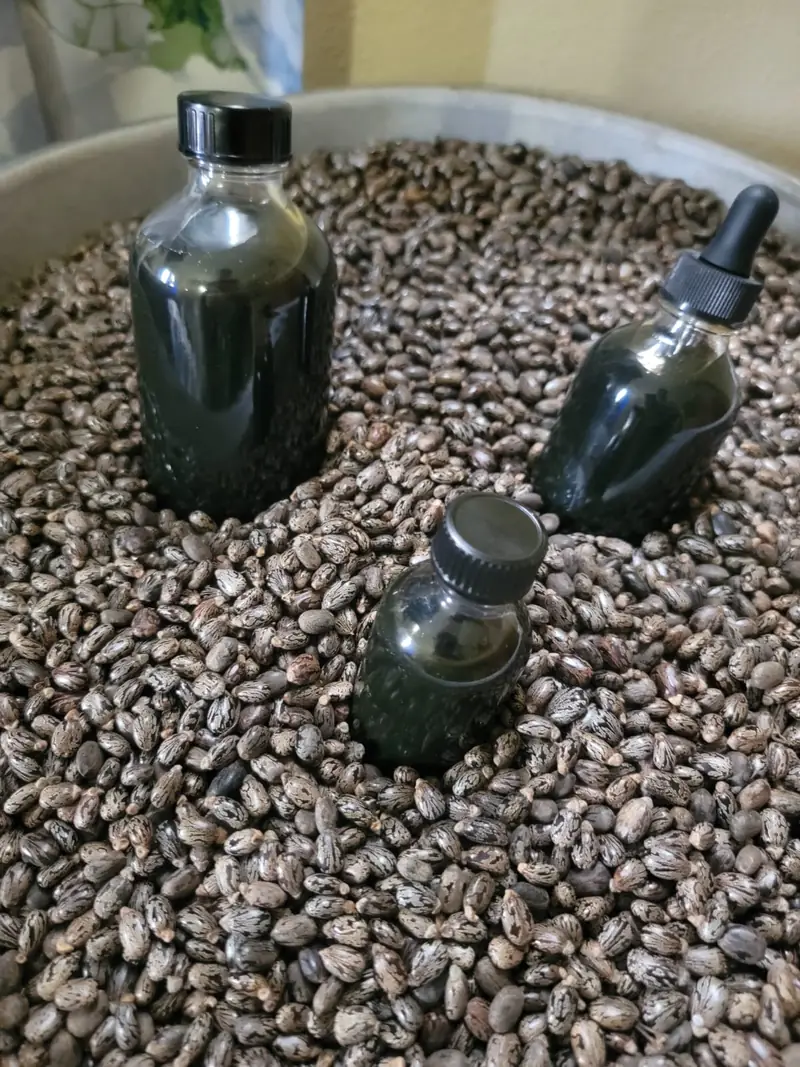
Black castor oil 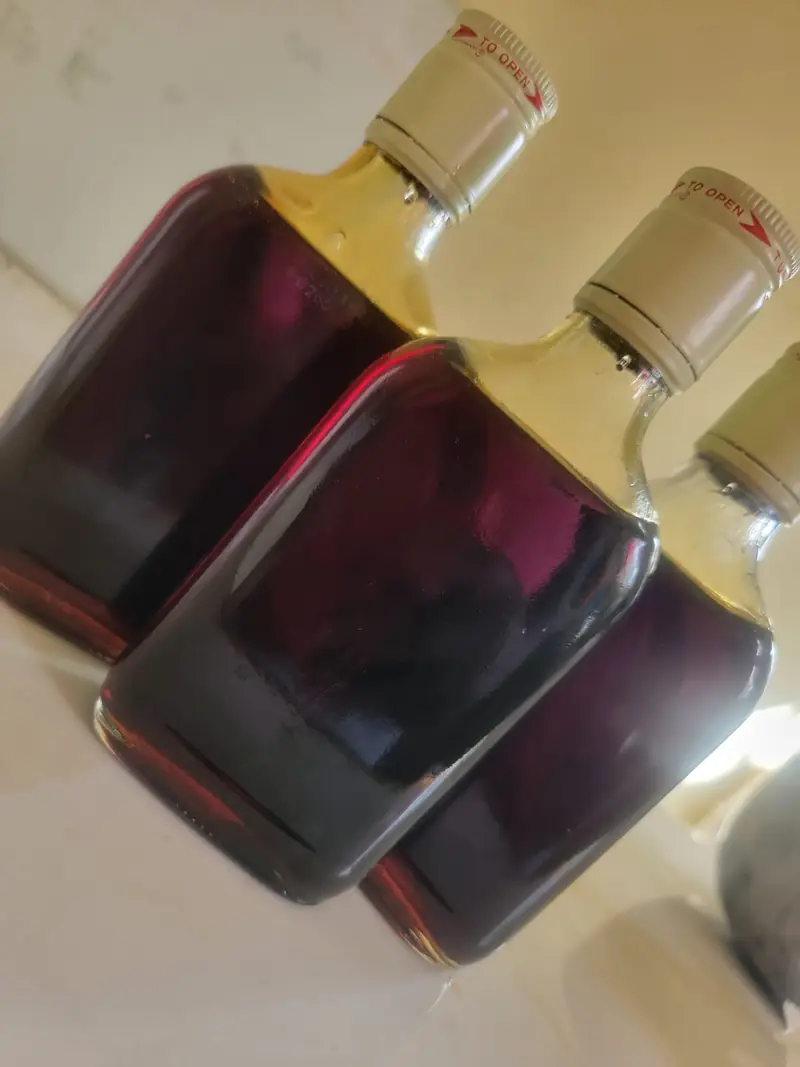
Black castor oil 
Black castor oil, from the batch 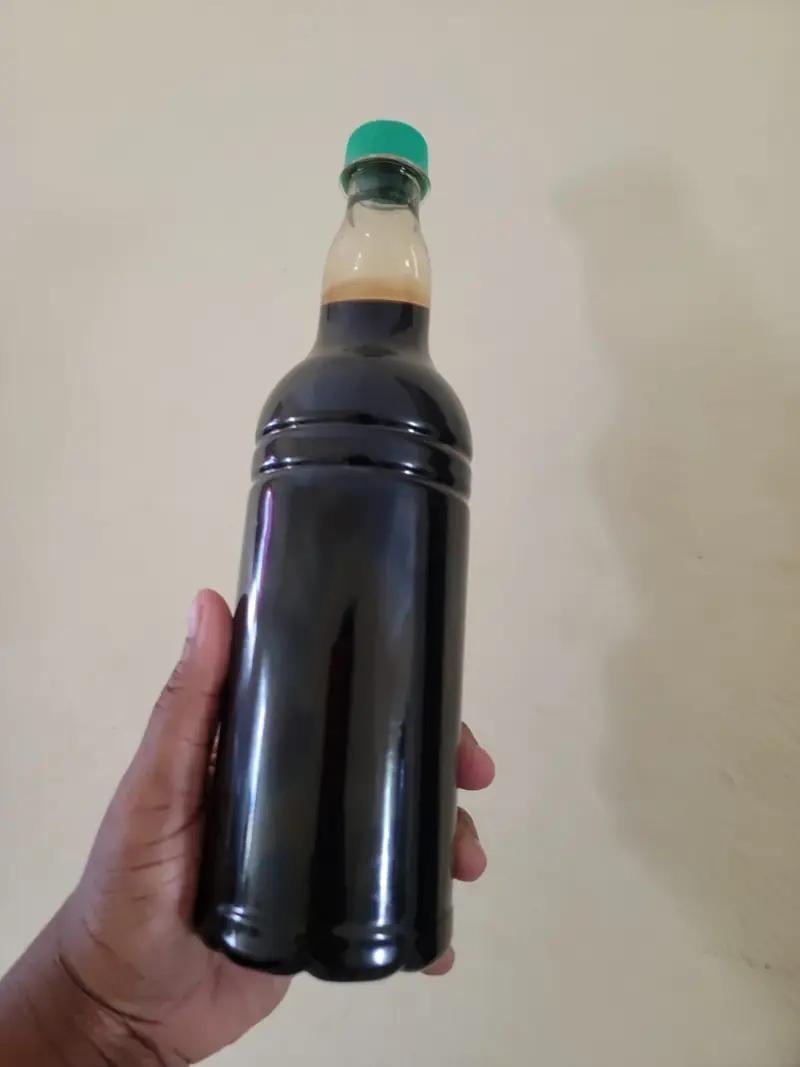
Black castor oil, 750 ml bottle 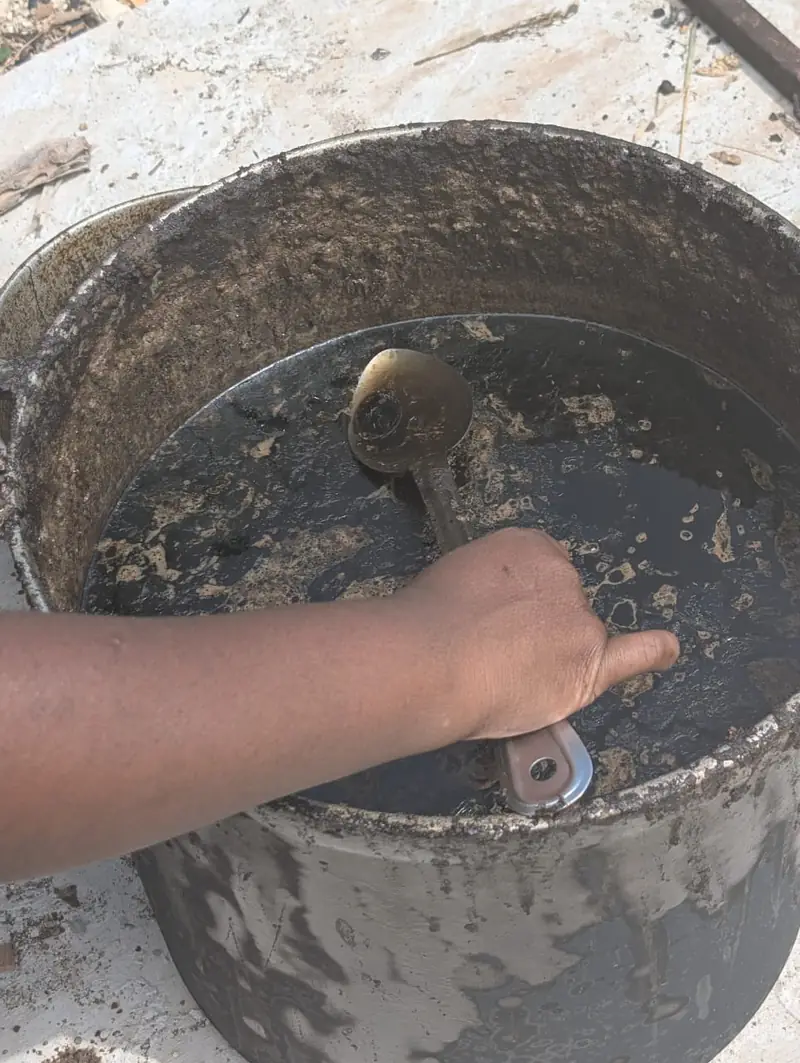
Skimming the oil off the top
Safe use
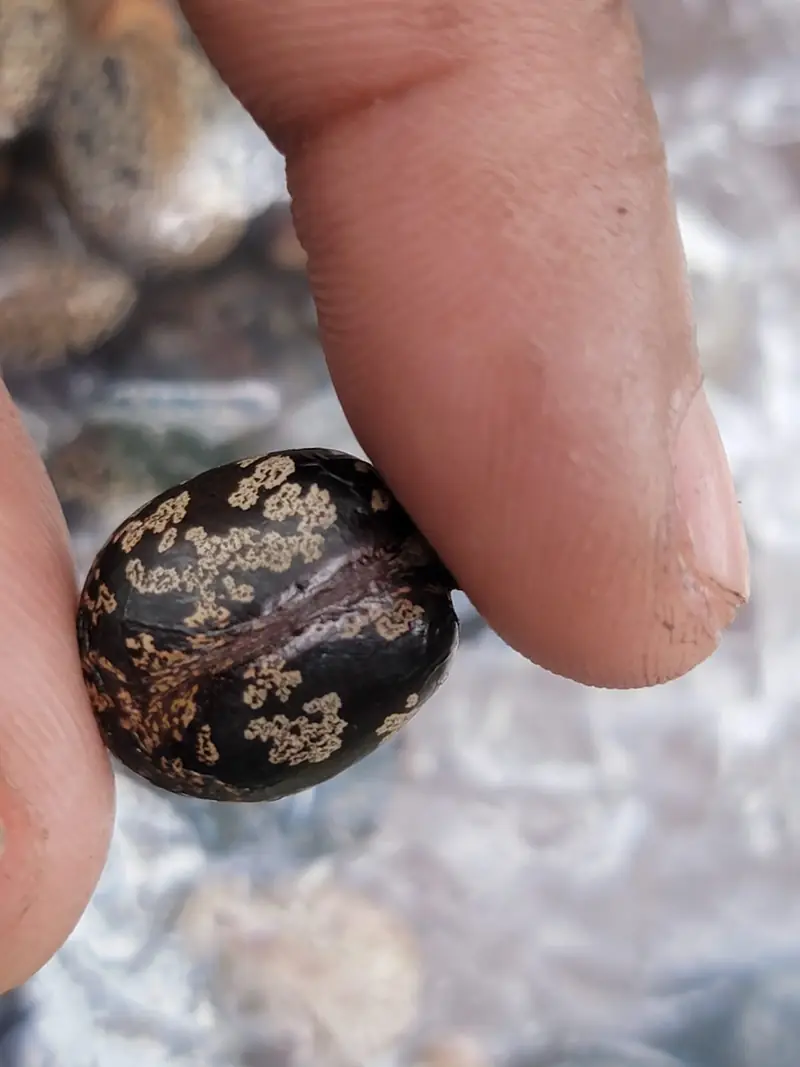
Never eat castor beans.
The beans contain ricin, which stays in the pressed bean cake, not in the oil.
- Castor oil is thick and can mat long, loose hair — work it through in small sections.
- Patch test before first use.
- Keep out of eyes.
What it can and can't do
- Moisturises
- Adds shine
- Softens
- Conditions
- Leaves hair looking strengthened
- Seals in moisture
- Helps detangle
We don't claim it makes hair longer. It moisturises, adds shine and leaves hair looking strengthened.
Castor oils from Hk's
Light and mild
Cold Pressed Castor Oil
Moisturises · Adds shine
- 2 oz
- 4 oz
- 8 oz
- 16 oz
- 750 ml
See details
Rich and dark
Jamaican Black Castor Oil
Moisturises · Adds shine · Strengthened-looking hair
- 2 oz
- 4 oz
- 8 oz
- 16 oz
- 750 ml
See details
Hand-made, batch-numbered
Traditional Jamaican Black Castor Oil
Moisturises · Adds shine · Strengthened-looking hair
- 2 oz
- 4 oz
- 8 oz
- 16 oz
- 750 ml
See details
Castor questions
Why is castor oil so thick?
Castor oil is about 85 to 90% ricinoleic acid, an unusually thick fatty acid. That is what makes the oil thick.
How do I put it in?
Warm a few drops between your palms and work it through in small sections. On long hair, work it through rather than bunching it in — the oil is thick and can mat.
What is the difference between cold pressed and black castor oil?
Cold-pressed oil is pressed from unroasted beans and is pale. Black castor oil comes from roasted beans — that is where the dark colour and smoky scent come from.
How is the Traditional tier made?
The beans are roasted, pounded and boiled in water, and the oil is skimmed off the top. It is made by hand in small batches.